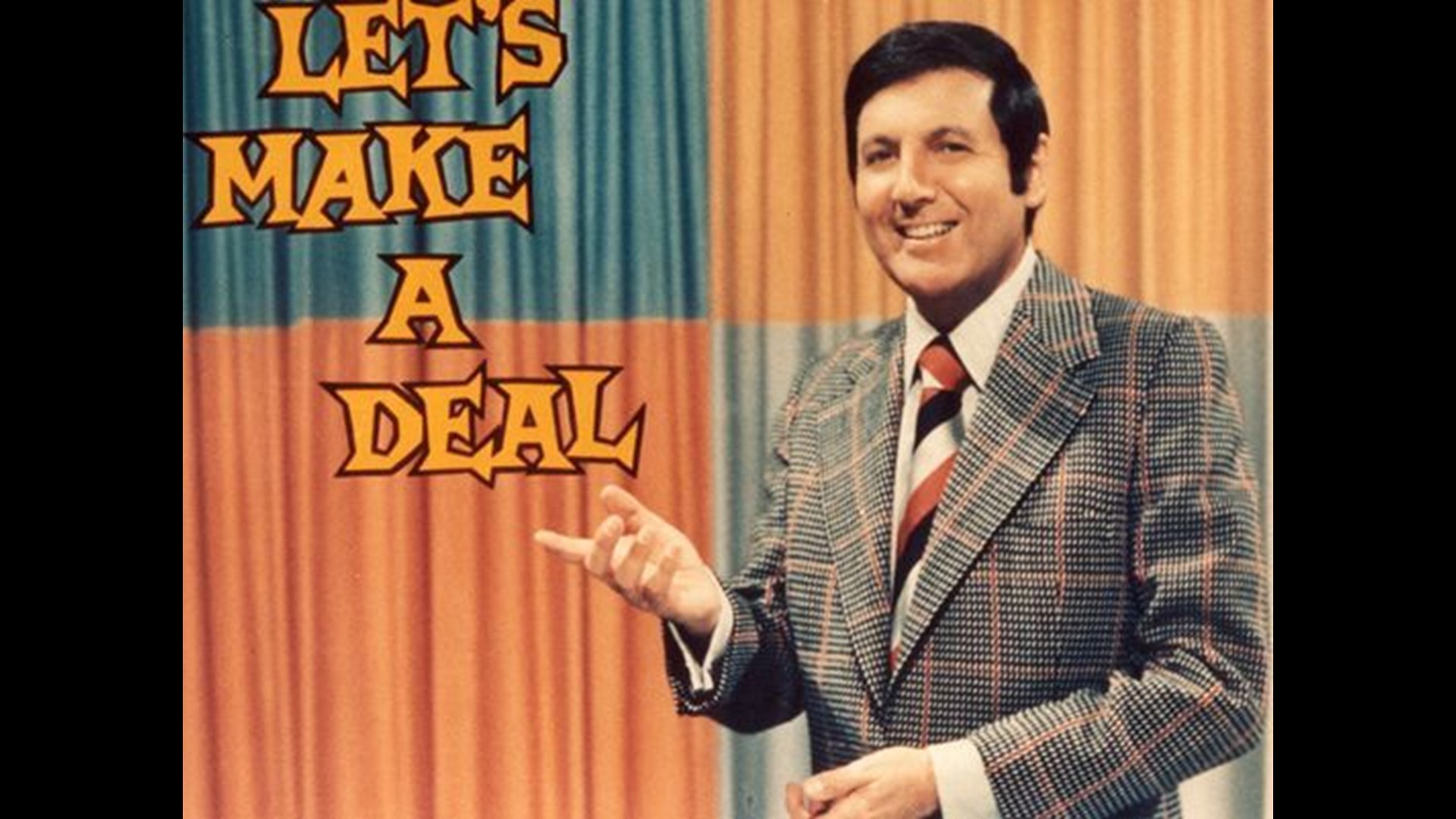
Let's Make a Deal was a game show that started in 1963 and was quite popular for awhile. Contestants traded with the host, Monty Hall, not knowing what they were trading for but hoping that it would be something of increasing value. At the end, a contestant would be shown 3 doors on the stage, and behind each door was a prize. Two of the prizes were "zonk" prizes, which had little value. One door had the bonus prize, which could be a trip somewhere, a new washer/dryer, etc. The contestant would choose one of the doors, and then Monty would tell them that he liked them so much that he was going to show them what was behind one of the two doors the contestant did not pick, which contained a "zonk". Monty would then offer to let them switch to the other door if they wanted to.
The question here is: what should you do? Or in a statistical context, what is the strategy that would optimize the probability that they would get the bonus prize?
For example, the contestant picks door 1. Either the contestant got it right and door 1 is the bonus (a 1/3 probability), or the contestant got it wrong and the bonus is behind one of the other 2 doors. Let's say it's door 2. Monty shows them door 3, which is a zonk, and allows them to switch. Should they switch?
In the simulation below, you will see 3 doors below. Click "Play", and the computer will randomly put the $1M bonus prize inside one of the doors, and $0 behind the other 2. You can choose one of the doors, and it will be outlined in blue.
Then click "Reveal", and I will show you one of the doors you did not click.
You can then choose a different door if you like.
Click "Open" and I will show you what was behind all the doors so you can see if you win the cash!
|